
What’s in This Guide
- What Are the Main Layers of a Shingle Roof?
- How Roofers Inspect the Roofing System Layers
- Frequently Asked Questions
- Schedule a Roof Inspection in Hyde Park, NY
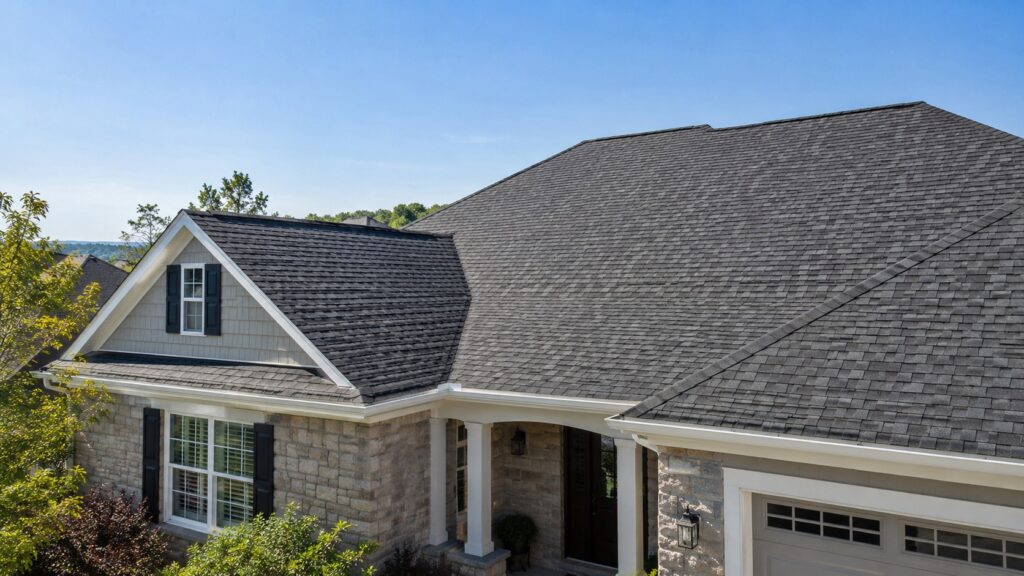
A shingle roof is made up of several components that work together to protect the home. For Hyde Park homeowners, understanding the basic roofing system layers can make it easier to follow inspection findings and recognize where problems may develop.
Common components may include roof decking, underlayment, leak barriers, starter strips, shingles, flashing, ventilation, and ridge caps. The exact materials and installation requirements can vary depending on the roof, local conditions, and applicable building codes.
Quick Facts
- Decking provides the structural surface beneath the roof covering.
- Roof underlayment adds secondary moisture protection beneath shingles.
- Leak barriers protect vulnerable areas such as eaves, valleys, and penetrations where required.
- Starter strips, shingles, flashing, ventilation, and ridge caps work together to manage wind, water, heat, and moisture.
- Roofers inspect the full assembly because a failed component can allow damage to spread beyond the visible problem.
What Are the Main Layers of a Shingle Roof?
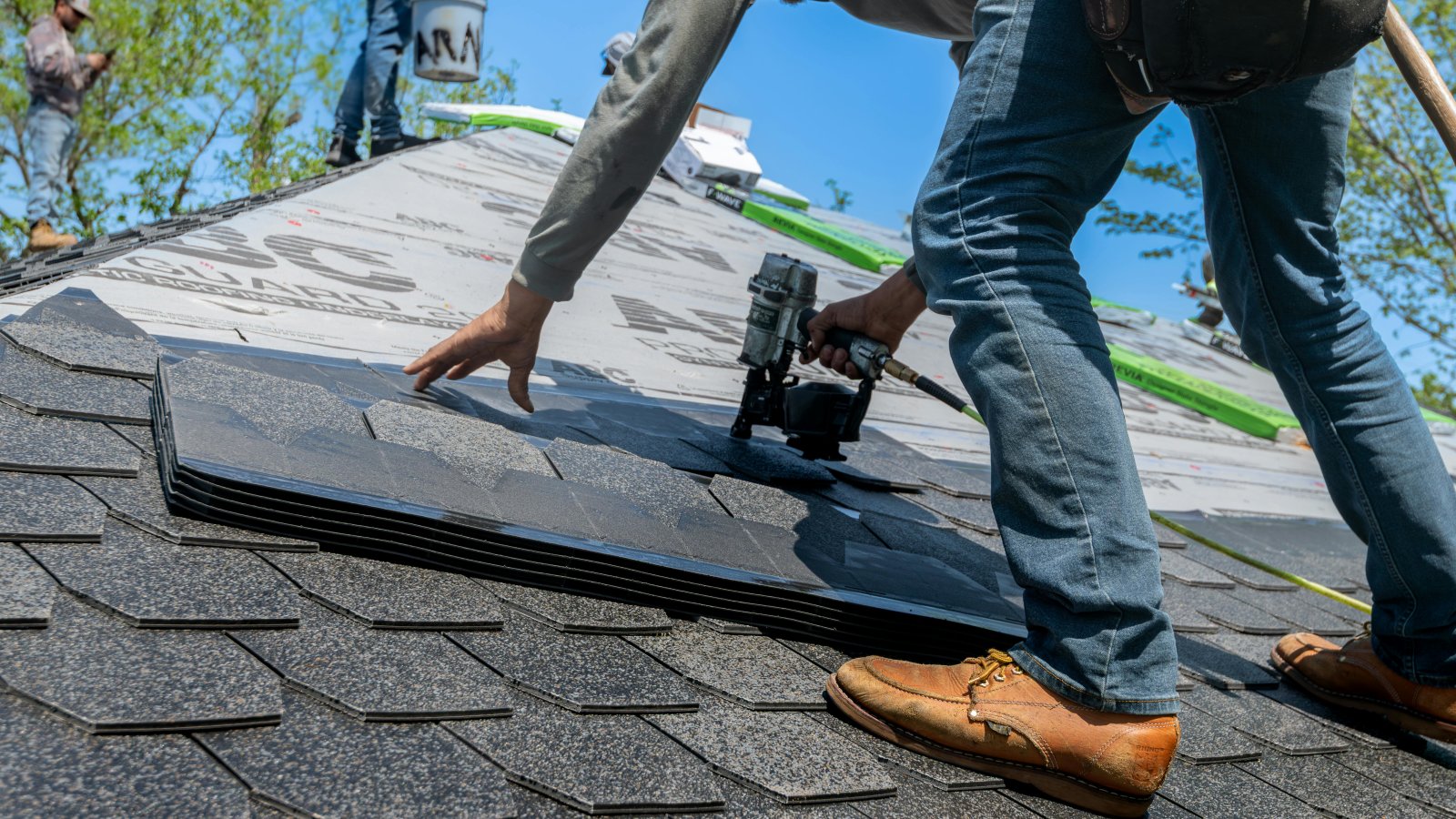
1. Roof Decking: The Structural Base
Roof decking, or sheathing, forms the solid surface attached to roof framing. Under the 2025 Residential Code of New York State, asphalt shingles are fastened to wood structural panels or solid lumber sheathing.
What happens if it fails? Soft, rotted, delaminated, or damaged decking can weaken fastener holding power. Damaged sections may need replacement before reroofing.
2. Roof Underlayment: Secondary Water Protection
Roof underlayment is installed between the roof deck and shingles. It adds another layer of protection beneath the roof covering and may help limit moisture exposure if water gets past the shingles. The type and installation requirements can vary based on the roofing system and applicable building codes.
What happens if it fails? Torn, poorly lapped, or deteriorated underlayment can leave the deck more vulnerable when water gets past the shingles.
3. Leak Barriers: Protection at Vulnerable Areas
Leak barriers may be installed in areas that are more exposed to water, such as eaves, valleys, rakes, and roof penetrations. These materials add another layer of protection where water is more likely to collect or enter the roof assembly.
Placement and installation requirements can vary depending on the roof, local conditions, and applicable building codes.
What happens if it fails? Water can reach the deck at areas prone to backup or concentrated runoff.
4. Starter Strip: The First Shingle Course
The starter strip runs along roof edges before field shingles. It helps create a sealed first course and improves resistance to shingle blow-off along eaves and rakes.
What happens if it fails? Edge shingles may be more vulnerable to wind uplift, and water can enter beneath the first course.
5. Asphalt Shingles: The Primary Roof Covering
Asphalt shingles form the visible weather-shedding surface. Their overlapping layout directs rain toward the eaves while shielding lower layers from sun, wind, and precipitation.
What happens if they fail? Missing, cracked, lifted, or worn shingles can expose lower layers to water and ultraviolet exposure. One damaged area does not automatically require full replacement.
6. Flashing: Water Control at Intersections
Flashing is typically made of metal and is installed where the roof meets walls, chimneys, valleys, vents, and other penetrations.
What happens if it fails? Open seams, corrosion, poor transitions, or displaced flashing can create concentrated leak paths.
7. Ventilation Components: Managing Heat and Moisture
Intake and exhaust vents help support airflow through a vented attic. Proper ventilation can help manage heat and moisture, although specific ventilation needs may vary based on the roof design, attic space, and applicable building requirements.
What happens if they fail? Blocked or unbalanced ventilation can contribute to excess attic heat or moisture, affecting insulation, sheathing, and roof performance.
8. Ridge Caps: Protecting the Highest Seams
Ridge cap shingles cover ridges and, where applicable, hips where roof planes meet. They protect these exposed joints while completing the shingle system.
What happens if they fail? Loose, cracked, or missing caps can expose high points to wind-driven rain and uplift.
How Roofers Inspect the Roofing System Layers
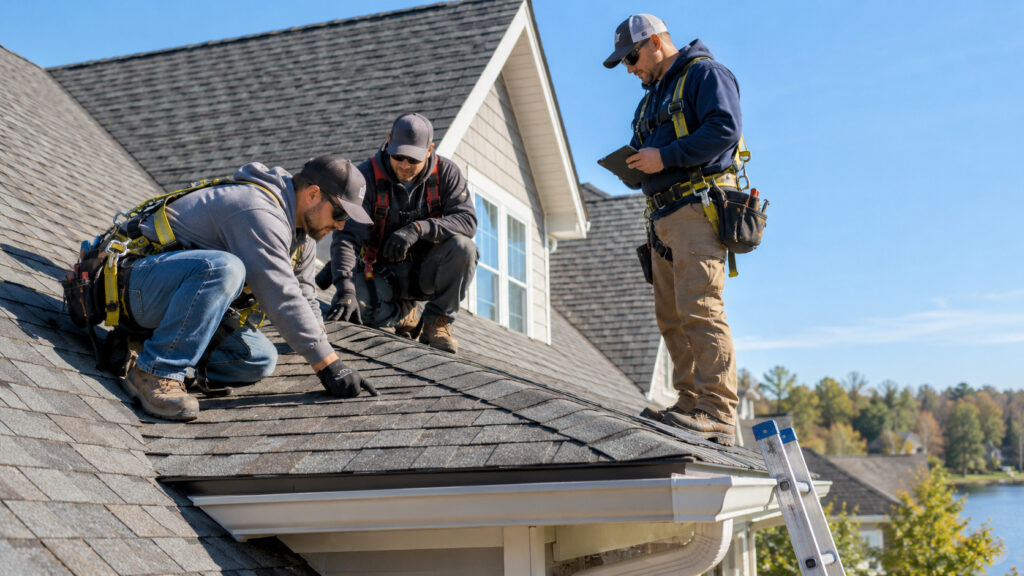
A professional inspection typically assesses the entire roofing system rather than only the visible shingle surface:
- Check for missing, lifted, cracked, or worn shingles.
- Review roof edges, starter areas, flashing, valleys, and penetrations.
- Look for signs of water intrusion, damaged decking, or attic moisture where accessible.
- Evaluate intake and exhaust ventilation for blockage or imbalance.
- Explain whether the issue appears localized or involves multiple layers.
Because roof access involves fall hazards, homeowners should avoid climbing onto the roof for diagnosis.
Frequently Asked Questions
How does Hyde Park’s winter weather affect a shingle roof?
Freeze-thaw cycles, snow, and cold temperatures can stress shingles and expose weak seals or already-damaged areas. If you notice changes after winter weather, roofers in Hyde Park, NY, can inspect the roof and determine whether repairs are needed.
Can nearby trees cause problems for shingle roofs in Hyde Park?
Yes. Branches can scrape shingles, while leaves and twigs can collect in valleys or gutters and hold moisture. Routine trimming and debris removal can help reduce avoidable wear.
Do clogged gutters affect a shingle roofing system?
They can. Blocked gutters may cause water to overflow or back up near the eaves, increasing moisture exposure around the roof edge, fascia, and lower roofing system layers.
Why can one side of a shingle roof wear faster than another?
Sun exposure, shade, prevailing weather, nearby trees, and roof geometry can create different conditions across the same roof. Uneven wear does not always mean the entire roof has failed, but it is worth evaluating.
Is moss or algae on a Hyde Park roof always a sign of damage?
Not necessarily. Algae often affects appearance, while moss can hold moisture and disturb shingle edges as it grows. A roofer can assess whether cleaning, maintenance, or repair is appropriate.
Schedule a Roof Inspection in Hyde Park, NY
If you see missing shingles, recurring leaks, damaged flashing, or signs of moisture, an inspection can identify which roofing system layer needs attention. Roofing Experts of Hyde Park serves residential and commercial properties in Hyde Park and nearby Hudson Valley communities.
Schedule a roof inspection or request a free estimate to discuss the condition of your roof and the next practical step.
Related Posts