
What’s In This Guide
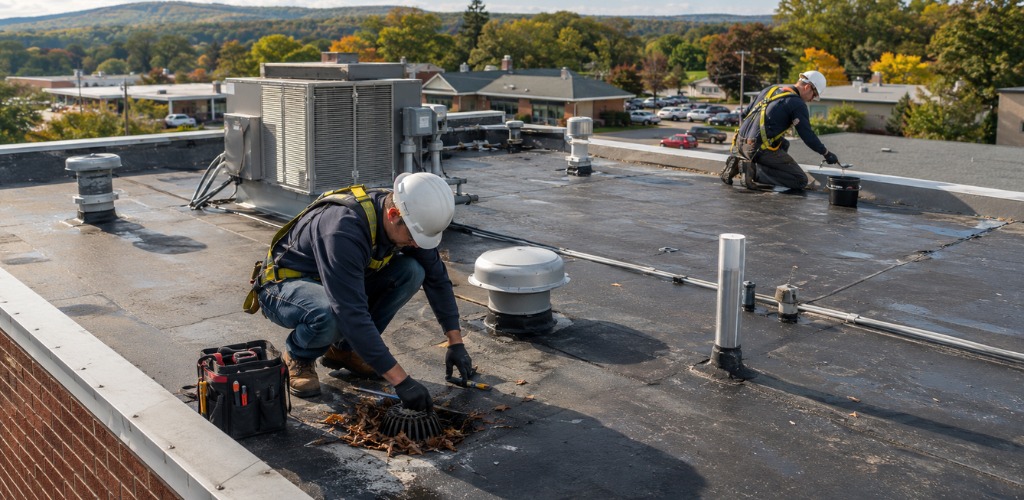
Commercial roof maintenance is a proactive system for finding deterioration, correcting manageable defects, and tracking a roof’s condition over time. For Hyde Park business owners and property managers, the goal is not to promise that every leak can be prevented. It is to replace guesswork with consistent inspections, documented decisions, and timely repairs.
Quick Facts
- A commercial roof maintenance plan should combine scheduled inspections, drainage care, membrane and flashing reviews, documentation, repair priorities, and seasonal follow-up.
- Spring and fall are practical inspection windows for Hyde Park properties, with added checks after severe weather or rooftop work.
- Drainage components need routine attention because debris, snow, and ice can restrict water flow.
- Every visit should produce dated photos, findings, completed work, and recommended next steps.
- Roof access should be limited to trained professionals who follow appropriate safety procedures and use suitable equipment.
What Is a Commercial Roof Maintenance Plan?

A commercial roof maintenance plan is a written service schedule tailored to the roof system, age, drainage design, rooftop equipment, warranty requirements, and environmental exposure. It should identify what will be reviewed, how often visits will occur, who will receive reports, and how urgent findings will be handled.
A maintenance visit differs from a limited leak-response call. Commercial roof maintenance evaluates the entire roofing system, including areas that have not yet caused visible interior damage.
What Should Commercial Roof Maintenance Include?
1. A Baseline Roof Inspection
The roofer should document the roof type, approximate age if known, access points, drainage layout, previous repairs, visible signs of moisture intrusion, and rooftop equipment.
2. Drainage and Ponding-Water Checks
Drains, scuppers, gutters, downspouts, and overflow routes should remain clear and securely connected. Inspection and cleaning frequency should reflect the roof design, surrounding tree cover, seasonal conditions, and manufacturer or warranty requirements. On low-slope roofs, the inspection should also note recurring ponding areas, sediment lines, and displaced strainers.
3. Membrane and Surface Review
The roofer should examine the roof surface for punctures, open seams, splits, blisters, ridges, exposed fasteners, worn coatings, and damaged materials. The inspection method should match the specific roof assembly. A visible irregularity does not automatically require replacement, but it should be photographed and evaluated.
4. Flashing, Edge, and Penetration Review
A complete inspection should cover perimeter metal, parapet transitions, curbs, vents, pipes, skylights, hatches, expansion joints, and the condition of sealants.
5. Interior and Roof-Deck Clues
When access allows, the plan may include inspecting ceilings, upper walls, and the underside of the roof deck for stains, damp materials, corrosion, or visible gaps that allow daylight through. Interior evidence can help narrow the investigation, although the actual point of water entry may be elsewhere.
6. Written Documentation
Each maintenance visit should produce a dated report containing photos, roof-area labels, observed conditions, completed work, and repair recommendations. Store these reports with warranty documents, roof plans, invoices, and records of rooftop work. Consistent documentation helps property managers track changes and budget for future repairs.
7. Prioritized Repair Planning
The report should distinguish active leaks and immediate safety concerns from near-term repairs and conditions that require monitoring. Each recommendation should identify the affected area and the proposed next step. Project scope, access, weather, material availability, and overall roof condition can influence scheduling, so repair timelines require a property-specific assessment.
How to Build a Practical Maintenance Schedule
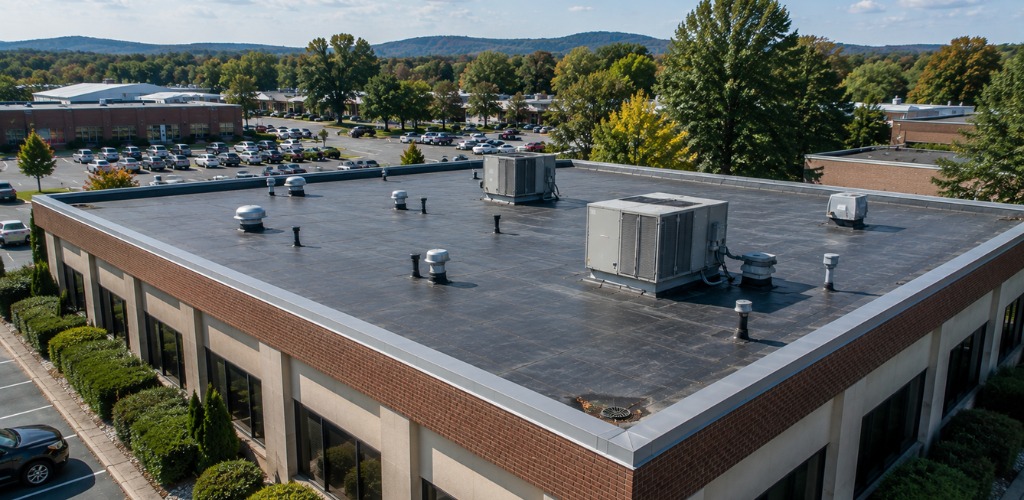
The appropriate frequency depends on the roof system, building use, roof age, surrounding tree cover, warranty terms, and previous problems. Manufacturer instructions and warranty requirements should be reviewed before the final schedule is established.
- Start with a professional baseline inspection.
- Schedule routine service in spring to assess winter-related damage and in fall to prepare the roof for colder weather.
- Add targeted inspections after severe winds, hail, heavy snowfall, a reported leak, or rooftop work performed by another trade.
- Review each report, authorize urgent repairs, and schedule follow-up checks for conditions that require monitoring.
Why Roof Access Should Be Controlled
A maintenance plan should define authorized roof access procedures and require visits by contractors or staff to be logged. Roof work presents significant safety risks. OSHA reports that falls to a lower level accounted for 389 of 1,034 construction fatalities in 2024. Property managers should not send untrained employees onto a roof to investigate leaks or remove snow. Qualified professionals should evaluate roof conditions and follow appropriate fall-protection procedures.
Frequently Asked Questions
How often should a commercial roof be inspected?
Spring and fall are practical inspection periods for many Hyde Park buildings. Additional inspections may be appropriate after severe weather, a reported leak, or work involving rooftop equipment. The final schedule should follow the roof manufacturer’s instructions and applicable warranty terms.
Does maintenance guarantee that a roof will not leak?
No. A program can identify visible concerns and support timely repairs, but concealed conditions and future weather events can still cause water entry.
Should every finding be repaired immediately?
No. Active leaks, loose materials, unsafe conditions, and defects likely to worsen usually need faster action. Other items may be monitored or grouped into planned work after a roofer evaluates the building.
Can roof maintenance extend the life of a commercial roof?
Regular maintenance may help extend a roof’s service life by identifying minor issues before they become larger problems. Actual service life depends on the roof system, installation quality, weather exposure, and repair history.
Can maintenance be performed while the building is occupied?
Often, yes. Many inspections and routine maintenance tasks can be completed during normal business hours. Access and scheduling requirements will depend on the building, roof conditions, and scope of work.
Create a Clear Roof Care Plan for Your Hyde Park Property
Roofing Experts of Hyde Park provides commercial roof inspections, maintenance, repairs, and project estimates. Schedule an inspection to document your roof’s current condition and develop a practical maintenance plan for your building.