
What’s In This Guide
A flat or low-slope roof depends on connected components that move water away from the building. One clogged drain or open seam can let moisture reach insulation, decking, ceilings, and occupied spaces before the source becomes obvious.
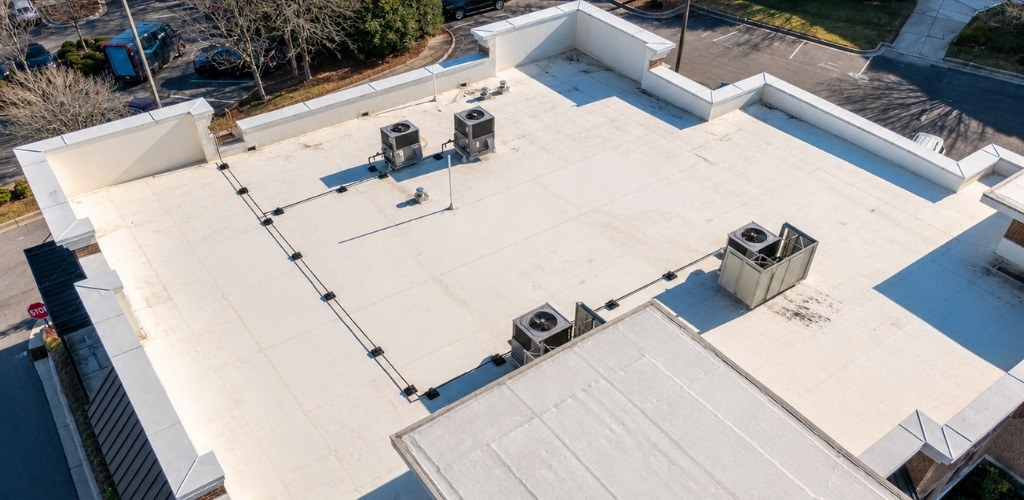
For Hyde Park properties, commercial flat roof maintenance means identifying drainage problems, membrane deterioration, loose flashing, damage around penetrations, and traffic-related wear before repairs become extensive.
Quick Facts
- Keep drains, scuppers, gutters, and overflow paths clear.
- Check membranes and seams for openings, punctures, blisters, wrinkles, or lifted areas.
- Inspect flashing and seals around walls, curbs, and roof penetrations.
- Review rooftop equipment areas after service visits and severe weather.
- Document findings and schedule professional repairs before damage spreads.
What Commercial Flat Roof Maintenance Should Include

Commercial roofs should generally be inspected twice a year, in accordance with applicable manufacturer requirements, and as soon as possible after heavy wind or rain. Roof age, warranty terms, drainage history, nearby trees, and rooftop activity may justify more frequent checks.
1. Drainage Paths and Ponding Areas
Start with roof drains, strainers, scuppers, gutters, downspouts, and overflow outlets. Remove leaves, sediment, trash, and vegetation. Confirm that strainers are secure and that water has a clear route to each outlet.
Also note recurring puddles, staining, silt lines, compressed insulation, or low areas near curbs and roof hatches. Standing water may point to blocked drainage, roof deflection, damaged insulation, or an inadequate slope. Do not assume that clearing a drain resolves the underlying cause if ponding returns.
2. Membrane Condition
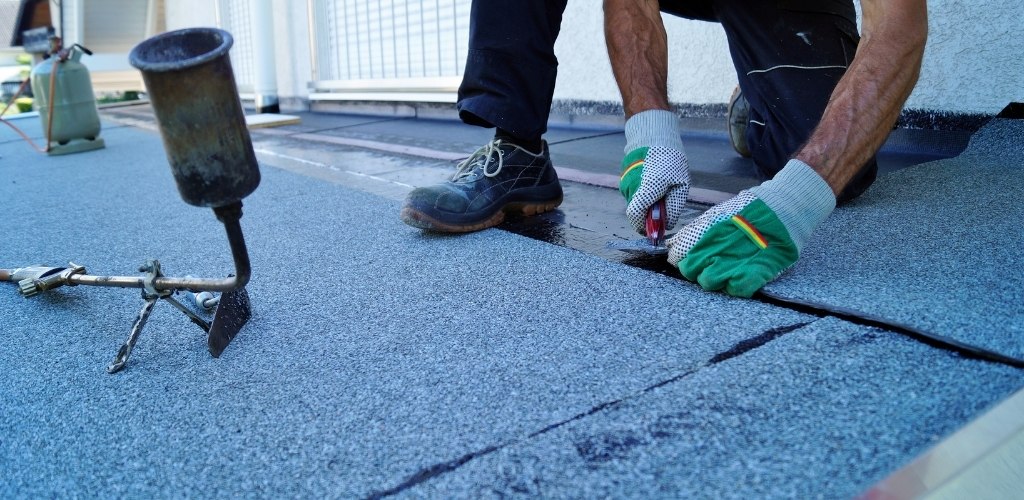
Commercial flat roofing systems may use single-ply membranes, modified bitumen, built-up roofing, or coatings. Common warning signs include cuts, punctures, cracks, blisters, ridges, wrinkles, exposed reinforcement, loose areas, and surface wear.
Check foot-traffic routes and service areas. Dropped tools, sharp debris, ladders, equipment panels, and repeated walking can damage a membrane before an interior leak appears.
3. Seams, Laps, and Fasteners
Seams and laps connect membrane sections and move with wind and temperature changes. Check for lifted edges, gaps, fishmouths, failed adhesive, split cover tape, backed-out fasteners, or plates that appear to tent beneath the membrane.
Do not cover an open seam with generic caulk. The correct commercial flat roof repair depends on the membrane type, attachment method, moisture conditions, and manufacturer specifications.
4. Flashing and Roof Edges
Inspect base flashing where the roof meets parapet walls, curbs, hatches, skylights, and other vertical surfaces. Check edge metal, coping, counterflashing, pitch pockets, boots, and termination bars for gaps, corrosion, loose fasteners, displaced sections, cracked sealant, or open corners.
The Whole Building Design Guide notes that lifted edge flashing can allow wind to get beneath the roof membrane and peel it back. After strong winds, examine roof edges and perimeter details even when the interior shows no signs of a leak.
5. Rooftop Equipment and Penetrations
HVAC units, exhaust fans, vents, pipes, conduits, antennas, and supports create penetrations and transition points in or above the roof system. Inspect curbs, flashing, seals, condensate lines, equipment panels, and nearby membrane areas. Look for loose components, deteriorated sealant, punctures, oil or chemical exposure, and water collecting behind equipment.
Schedule a roof check after contractors install or service rooftop equipment. Record who accessed the roof, where work occurred, and whether contractors added penetrations or supports.
6. Debris and Unauthorized Roof Traffic
Debris can trap moisture, block drainage, abrade the surface, and hide damage. Remove it without dragging sharp materials. Limit access, use designated walk paths, and keep stored materials away from drains.
READ MORE: Roof Restoration vs Roof Replacement: How to Decide
How to Build a Flat Roof Maintenance Routine
- Step 1: Create a roof plan. Mark drains, scuppers, equipment, penetrations, access points, previous repairs, and recurring problem areas.
- Step 2: Inspect in spring and fall. Add documented checks after heavy rain, high winds, heavy snowfall or icing, rooftop construction, or equipment servicing.
- Step 3: Photograph conditions. Take consistent overview and close-up images so changes are easier to compare.
- Step 4: Prioritize defects. Escalate active leaks, loose edge metal, open seams, punctures, blocked drainage, and signs of wet insulation.
- Step 5: Use compatible repairs. Have a qualified roofing professional identify the roof system and select materials that comply with its specifications and warranty requirements.
Roof Inspection Safety Matters
Roof access creates fall and trip hazards. OSHA states that general-industry workplaces generally require fall protection at elevations of four feet or more, with additional rules for work near low-slope roof edges. Keep routine observations ground-based or interior-based when possible. Leave rooftop inspections to trained, properly equipped personnel.
Frequently Asked Questions
How often should a commercial flat roof be inspected?
A practical baseline is twice a year, typically in spring and fall, plus inspections after severe weather, rooftop equipment work, or any reported leak. Follow the roof manufacturer’s maintenance and warranty requirements.
Can building staff perform flat roof maintenance?
Staff can monitor ceilings, record leaks, control roof access, and report visible drainage or debris concerns from safe locations. Rooftop inspection and repair should be handled by trained personnel who understand fall protection and the specific roofing system.
When does a commercial flat roof require repair?
A roof condition requires repair when there is an open seam, puncture, failed flashing, damaged membrane, loose edge detail, wet insulation, or another defect that requires system-specific materials and installation methods.
What warning signs should building owners watch for between roof inspections?
Look for ceiling stains, standing water, clogged drains, loose flashing, membrane damage, debris buildup, or recurring leaks.
How can regular maintenance reduce commercial flat roof repair costs?
Routine maintenance can identify small problems before they damage insulation, decking, or interior spaces, helping reduce the risk of more expensive repairs. Regular roof evaluations may help identify problems before they require larger repairs, but they cannot guarantee that all damage or repair costs will be prevented.
Schedule a Commercial Roof Inspection in Hyde Park
Small roof defects can remain hidden until moisture spreads beyond the membrane. Roofing Experts of Hyde Park can evaluate drainage, seams, flashing, penetrations, rooftop equipment areas, and visible storm damage.
Schedule a roof inspection or request a free estimate to discuss your commercial roofing needs in Hyde Park, NY.