
Quick Facts
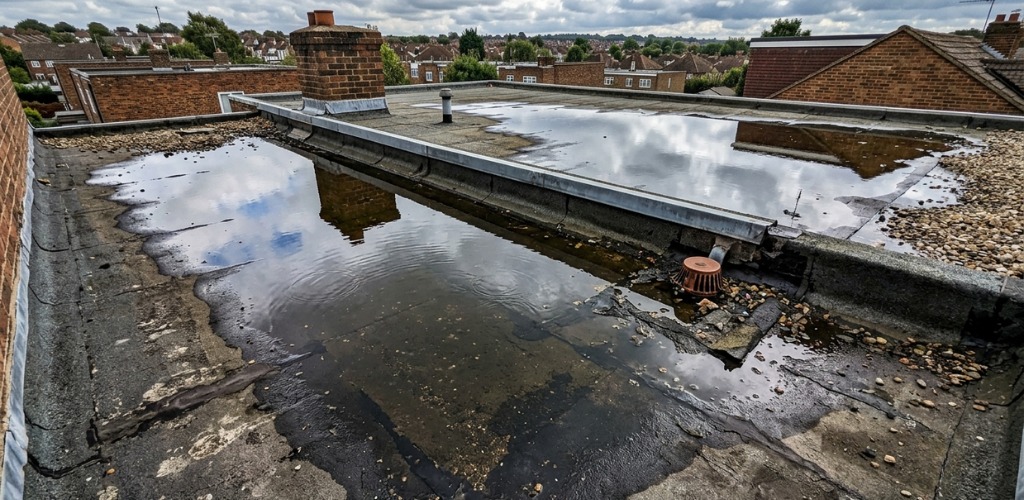
- Ponding water is one of the most common causes of industrial flat roof failure.
- Hyde Park freeze-thaw cycles accelerate membrane cracking and seam separation.
- Hidden moisture damage can spread beneath roofing systems before leaks appear indoors.
- Routine inspections help reduce long-term repair and replacement costs.
- Early maintenance extends the lifespan of industrial flat roofing systems.
What’s In This Guide
Industrial flat roofs face constant exposure to weather, moisture, temperature changes, and daily wear. In Hyde Park, NY, seasonal rain, snow, freeze-thaw cycles, and humidity can increase the risk of leaks, drainage issues, and hidden roof damage.
Many property owners only notice problems after interior damage appears, but small issues often start much earlier. Knowing what to look for can help prevent costly repairs and premature replacement.
Here are the flat roof problems Hyde Park property owners should know.
7 Flat Roof Problems Hyde Park Property Owners Should Know
1. Ponding Water After Rain or Snow
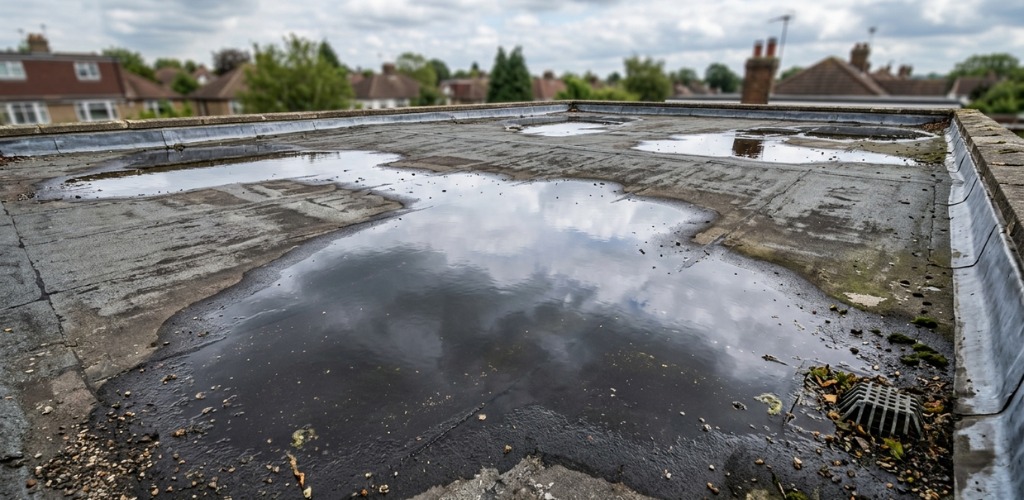
Ponding water occurs when water remains on a flat roof for more than 48 hours after rainfall. Common causes include:
- Poor drainage design
- Clogged drains
- Roof settling
- Snow and ice buildup
Why Ponding Water Is Dangerous
Ponding water can speed up roof coating breakdown by encouraging biofilm growth, trapping moisture against the surface, and weakening the membrane over time. It also increases leak risks and adds unnecessary weight stress to the roofing structure.
Signs to Watch For
Property owners should monitor for:
- Visible standing water
- Interior ceiling stains
- Mold odors
- Sagging roof sections
2. Membrane Cracks and Seam Separation
Freeze-thaw cycles repeatedly expand and contract roofing materials. Over time, seams weaken, and membranes begin separating. UV radiation also dries roofing materials, making them brittle and prone to cracking.
Common Problem Areas
Damage frequently develops around:
- Rooftop HVAC units
- Roof edges
- Flashing connections
- Drain openings
Why Early Inspections Matter
A commercial roofing expert can identify seam failures before water infiltrates insulation and decking layers. Early repairs are significantly less expensive than widespread moisture remediation.
3. Clogged Drains and Poor Roof Drainage
Industrial roofs collect leaves, dirt, and debris throughout the year. During winter, ice blockages can further restrict drainage systems.
Risks of Improper Drainage
Poor drainage increases the likelihood of:
- Ponding water
- Structural strain
- Membrane deterioration
- Interior leaks
Preventive Maintenance Tips
Property owners should:
- Inspect drains seasonally
- Remove debris regularly
- Schedule professional roof evaluations after storms
4. Roof Leaks Around HVAC Units and Penetrations
Industrial roofs contain multiple penetrations for equipment, vents, and utility systems. These areas experience frequent movement and vibration.
Improper flashing installation or deteriorated sealants often create leak entry points.
Common Signs of Penetration Leaks
Watch for:
- Rust around rooftop equipment
- Water stains near vents
- Indoor humidity increases
- Damp insulation
Why Professional Inspections Help
Experienced industrial roofing contractors use moisture detection methods to identify hidden water intrusion around penetrations before leaks spread throughout the building.
5. Blistering and Bubbling Roofing Materials
Blistering occurs when moisture or trapped air becomes sealed beneath roofing membranes.
Causes include:
- Poor installation
- Moisture infiltration
- Heat exposure
Why Blisters Should Not Be Ignored
Roof blisters weaken membrane integrity and can rupture under pressure, exposing underlying materials to water damage.
When Industrial Roof Replacement May Be Necessary
Small, isolated blisters can sometimes be repaired. However, widespread blistering may indicate severe moisture saturation requiring industrial roof replacement.
6. Flashing Failures Around Roof Edges
Flashing protects roof transitions, edges, and penetrations from water intrusion.
Common Flashing Problems
Industrial flashing systems often fail because of:
- Loose fasteners
- Cracked sealants
- Corrosion
- Wind damage
Why Edge Damage Spreads Quickly
Wind-driven rain can penetrate beneath damaged flashing and spread moisture into wall assemblies and insulation systems.
7. Hidden Moisture Damage Beneath the Roof Surface
Water often travels beneath roofing materials before visible leaks appear indoors. This makes hidden moisture especially dangerous for industrial buildings.
Long-Term Consequences
Undetected moisture can lead to:
- Mold growth
- Rotting roof decking
- Reduced insulation performance
- Higher energy costs
Modern Inspection Technologies
Professional inspections may include:
- Infrared moisture scanning
- Drone roof assessments
- Core sampling
- Thermal imaging
➤ CONTINUE READING: 10 Roofing Problems Home Inspectors Find Most Often
How to Prevent Major Industrial Flat Roof Problems
Step 1: Schedule Routine Roof Inspections
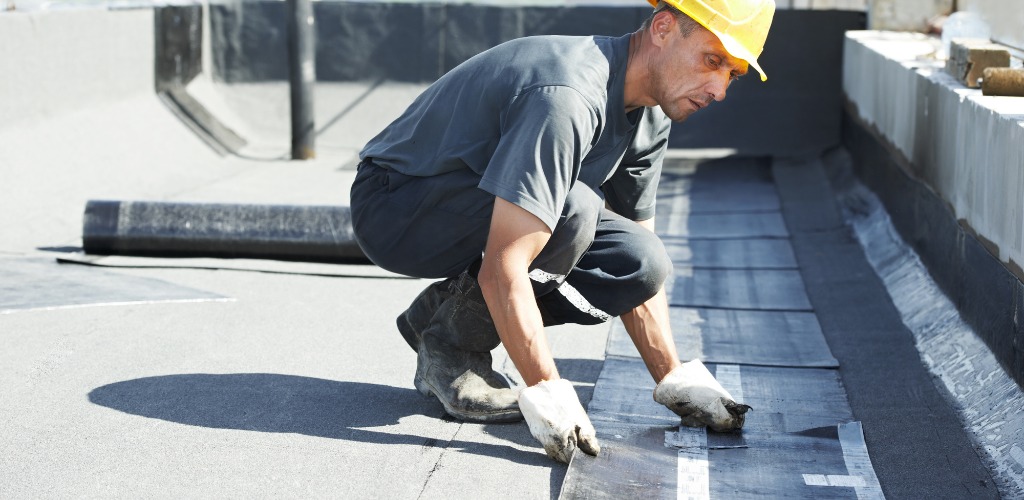
Industrial roofs should typically be inspected twice annually and after major storms. Searching for an industrial roof inspection nearby before problems appear can help identify early-stage damage.
Step 2: Keep Roof Drains Clear
Drainage systems should remain free of leaves, debris, and ice accumulation throughout the year. A commercial roofing expert can help identify drainage issues before they lead to ponding water and roof damage.
Step 3: Address Small Repairs Quickly
Minor membrane cracks and flashing damage worsen rapidly when exposed to Hyde Park’s freeze-thaw conditions.
Step 4: Maintain Roof Documentation
Maintenance records help property owners track recurring issues and identify aging roofing components.
Step 5: Work With Qualified Industrial Roofing Contractors
Industrial roofing systems require specialized inspection methods, safety protocols, and repair expertise. Professional evaluations reduce the likelihood of overlooked structural problems.
Frequently Asked Questions
How often should industrial flat roofs be inspected?
Most industrial roofs should be professionally inspected at least twice per year and after severe storms.
What is the most common cause of flat roof leaks?
Ponding water, flashing failures, and membrane seam separation are among the leading causes of industrial flat roof leaks.
Can ponding water permanently damage a flat roof?
Yes. Prolonged standing water accelerates membrane deterioration and increases structural stress.
How do I know if my industrial roof needs replacement?
Frequent leaks, saturated insulation, extensive membrane damage, and recurring repair costs often indicate replacement is necessary.
Are industrial roof inspections worth the cost?
Yes. Preventive inspections help detect minor issues before they lead to expensive structural repairs or interior damage.
Schedule a Professional Industrial Roof Inspection Near Me
Industrial flat roof problems rarely improve without intervention. Hyde Park’s weather conditions can quickly turn small drainage issues, seam damage, or flashing failures into widespread structural problems.
Routine inspections help property owners detect hidden moisture, identify early membrane deterioration, and avoid costly emergency repairs. Preventive maintenance also extends roof lifespan and improves overall building protection.
For property owners seeking experienced guidance on industrial roofing concerns, Roofing Experts of Hyde Park can help assess flat roof conditions before minor problems become major financial liabilities.
Contact Roofing Experts of Hyde Park today to schedule a professional flat roof inspection.