
What’s In This Guide
- When Does Ponding Water Need a Commercial Roofer?
- What Flat Roof Warning Signs Should Business Owners Watch For?
- How Should You Prepare for a Roof Inspection?
- Which Repairs Should Not Be Delayed?
- What Information Helps a Roofer Diagnose the Problem Faster?
- How Should Property Owners Compare Repair Options?
- What Should Happen After Roof Work Is Complete?
- Frequently Asked Questions (FAQs)
- Schedule Flat Roof Repair Before Ponding Water Gets Worse
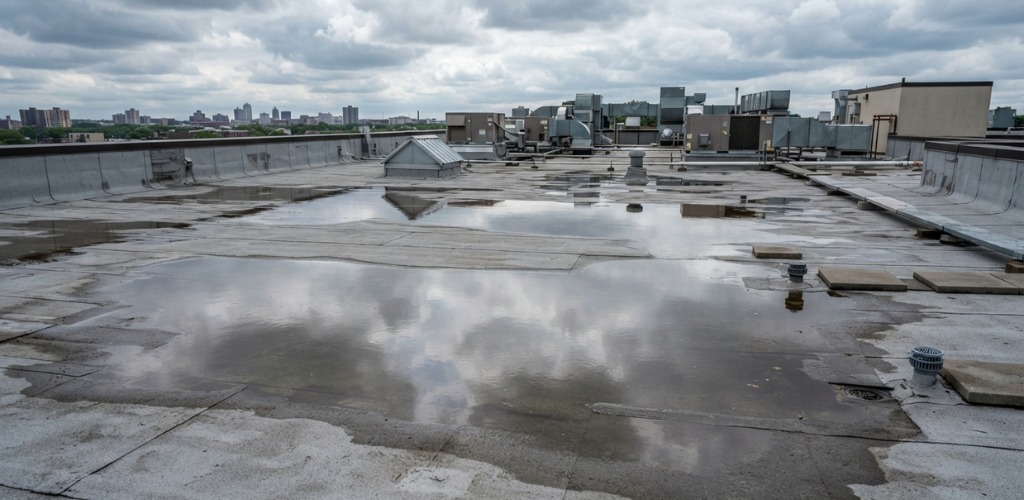
Ponding water on a commercial flat roof is more than an inconvenience. Left unaddressed, it can accelerate membrane deterioration, increase the risk of leaks, and shorten the roof’s service life.
If you’ve searched for commercial roofing contractors near me, understanding what causes ponding water and when professional repairs are necessary can help you make informed decisions before minor drainage issues become costly roof damage.
Quick Facts
- Flat roof repair in Hyde Park, NY, becomes important when ponding water, membrane wear, clogged drains, or flashing problems threaten business operations.
- Roof problems should be inspected from the ground first because ladders, roof edges, and wet surfaces create safety risks.
- OSHA fall protection guidance is a useful reminder that roof access should be treated as hazardous work.
- Water stains, soft decking, damaged flashing, and recurring clogs can point to deeper roof or drainage issues.
- A professional inspection helps separate maintenance, urgent repair, and replacement discussions.
When Does Ponding Water Need a Commercial Roofer?
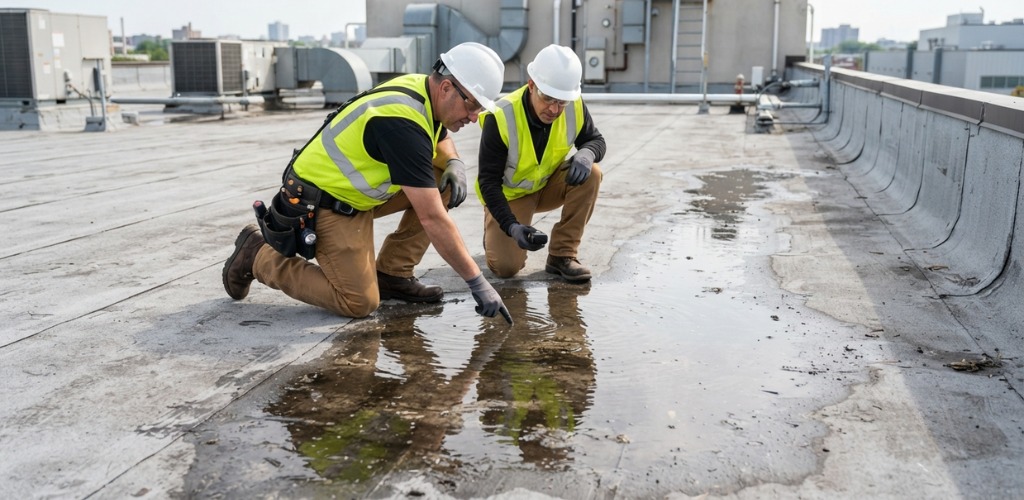
Flat roof repair in Hyde Park, NY, becomes important when ponding water, membrane wear, clogged drains, or flashing problems threaten business operations. Many property owners begin searching for commercial roof repair near me after noticing recurring leaks or standing water, but addressing these warning signs early can help limit more extensive damage.
The goal is to help property owners understand commercial flat-roof warning signs and repair planning without guessing from the ground. A roofer can check the visible damage, trace likely water paths, and explain whether the issue is isolated or part of a larger roof system problem.
What Flat Roof Warning Signs Should Business Owners Watch For?
Roof problems often show up as small clues before major damage appears. Property owners and facility managers should document visible changes from safe areas and avoid climbing onto the roof.
- Water stains on ceilings or upper walls
- Blistered membrane, open seams, punctures, or worn roof surfaces
- Damaged flashing around walls, vents, rooftop equipment, parapets, or roof edges
- Clogged drains, blocked scuppers, overflowing gutters, or recurring ponding water
- Soft roof areas, ceiling stains, peeling interior paint, musty odors, or damp insulation
MORE ON THIS TOPIC: 10 Roofing Problems Home Inspectors Find Most Often
How Should You Prepare for a Roof Inspection?
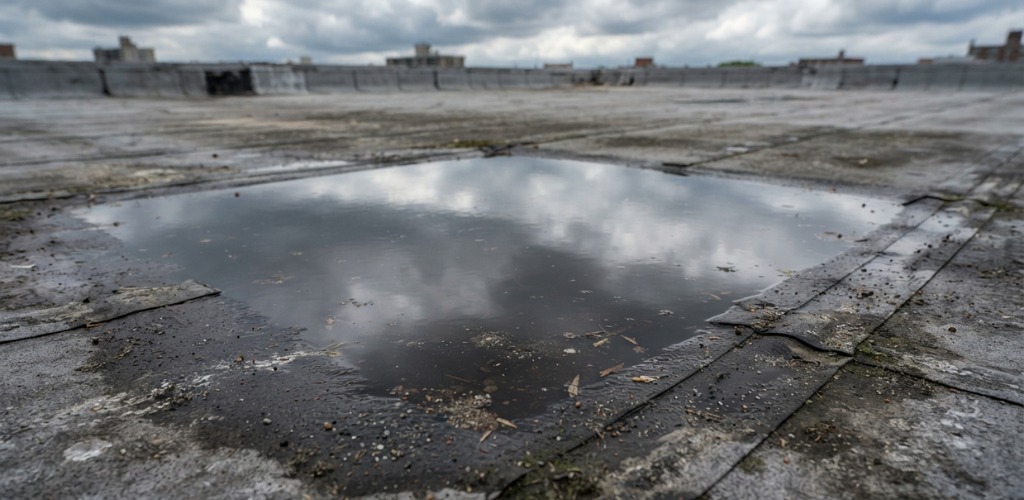
A clear inspection starts with information. Property owners, business owners, and facility managers can help by noting where water appears, when the issue started, and what weather conditions make the problem worse. Comparing several commercial roofing companies near me can also help you understand different repair recommendations, inspection processes, and maintenance options before approving any work.
- Take photos from the ground or indoors.
- List recent storms, leaks, clogs, or repairs.
- Point out stains, odors, ceiling changes, or interior moisture.
- Ask the roofer to explain repair priority and timing.
- Request clear next steps before authorizing work.
Active moisture problems should be addressed rather than covered over cosmetically.
Which Repairs Should Not Be Delayed?
Any active leak, electrical risk, interior staining, soft decking, or recurring water intrusion deserves prompt attention. Waiting can increase repair scope and make it harder to identify the original entry point.
- Leaks entering occupied rooms
- Water around electrical fixtures
- Open flashing gaps or storm damage
- Ponding water that returns after every rain
- Fascia, soffit, or edge damage tied to gutter failure
What Information Helps a Roofer Diagnose the Problem Faster?
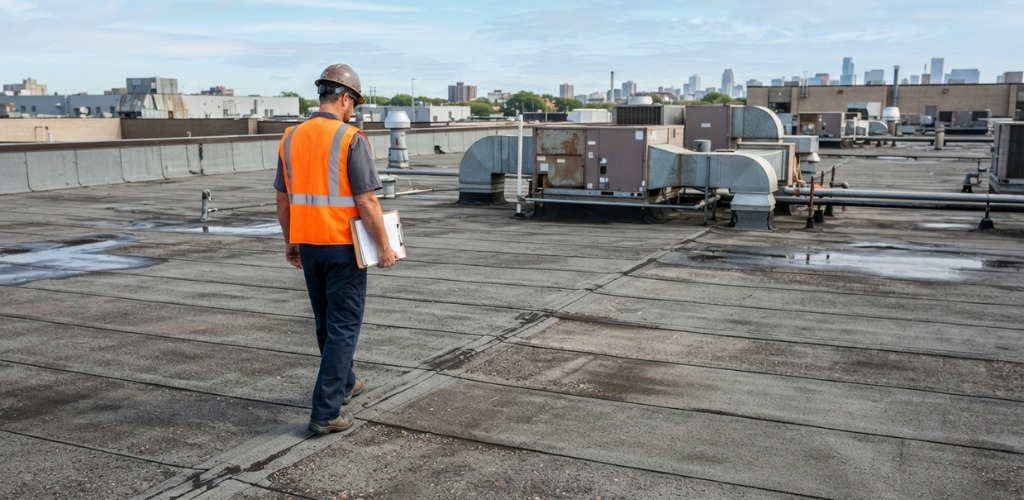
Good information can shorten the inspection and improve the repair conversation. Property owners should record when the issue appears, which rooms or roof areas are affected, and whether storms, clogs, or ice have made the problem worse.
Photos from the ground, upper floors, interior ceilings, or accessible maintenance areas can help, but safety comes first. No property owner, employee, or facility manager should climb onto a roof just to gather evidence.
- Write down when stains, drips, or ponding water first appeared.
- Share recent storm, wind, ice, or gutter overflow details.
- Point out previous repairs, warranty paperwork, or recurring trouble spots.
- Ask whether the issue is urgent, seasonal, or part of a larger roof system concern.
How Should Property Owners Compare Repair Options?
Repair options should be compared by urgency, expected life, water-control impact, and cost. If you’re evaluating a flat roof contractor near me, ask each company to explain the source of the problem, the proposed repair method, expected service life, and whether additional drainage improvements are recommended. The cheapest repair may not be the best choice if the same leak path is likely to return.
A useful roofing recommendation explains the source of the problem, the affected materials, the repair priority, and what could happen if the work is delayed. That context helps property owners avoid paying for temporary cosmetic fixes when water management needs a stronger solution.
Before approving work, request plain-language documentation of the scope and ask what signs should be monitored after the repair is complete.
What Should Happen After Roof Work Is Complete?
After roof work is complete, property owners should know what was repaired, what was monitored, and what maintenance steps can reduce repeat problems. Closeout documentation matters because roof issues can return if drainage, flashing, or ventilation problems remain.
Ask for photos when available, especially for areas that are hard to see from the ground. Photos help owners understand the repair and keep a useful record for future inspections.
- Save the repair scope, photos, and warranty details.
- Watch the same area during the next heavy rain.
- Keep gutters, drains, and roof edges clear when safe to do so from the ground or through routine service.
- Schedule follow-up inspections when the roof is older or has recurring leak history.
Good roof repair should leave the owner with more than a patched area. The owner should understand the likely cause, the completed work, and the next maintenance priority.
Frequently Asked Questions (FAQs)
Can business owners inspect their own flat roof?
Business owners can look from the ground, windows, upper floors, or interior ceilings, but roof access should be left to trained professionals with proper safety practices.
Does one leak mean the roof needs replacement?
Not always. A leak can come from flashing, vents, gutters, localized roof damage, or broader roof system failure. A professional inspection determines whether repair or replacement is the better option.
How soon should roof damage be checked?
Active leaks, storm damage, recurring gutter overflow, and ponding water should be inspected as soon as possible before moisture spreads to other parts of the building and increases repair costs.
What causes ponding water on a flat commercial roof?
Ponding water is often caused by clogged drains, blocked scuppers, roof settlement, insufficient slope, or damaged roofing materials that prevent water from draining properly. A professional inspection can identify the underlying cause and recommend the appropriate repair.
How often should a commercial flat roof be inspected?
Most commercial flat roofs should be professionally inspected at least twice a year, typically in the spring and fall, and after severe storms. Routine inspections help identify drainage issues, membrane damage, and flashing problems before they become more expensive repairs.
Schedule Flat Roof Repair Before Ponding Water Gets Worse
Ponding water rarely resolves on its own. Left untreated, it can increase the risk of leaks, membrane deterioration, and damage to the underlying roof system. Roofing Experts of Hyde Park helps commercial property owners identify the source of drainage problems and develop a repair plan based on the roof’s condition, business operations, and long-term performance goals.