- Free Estimates

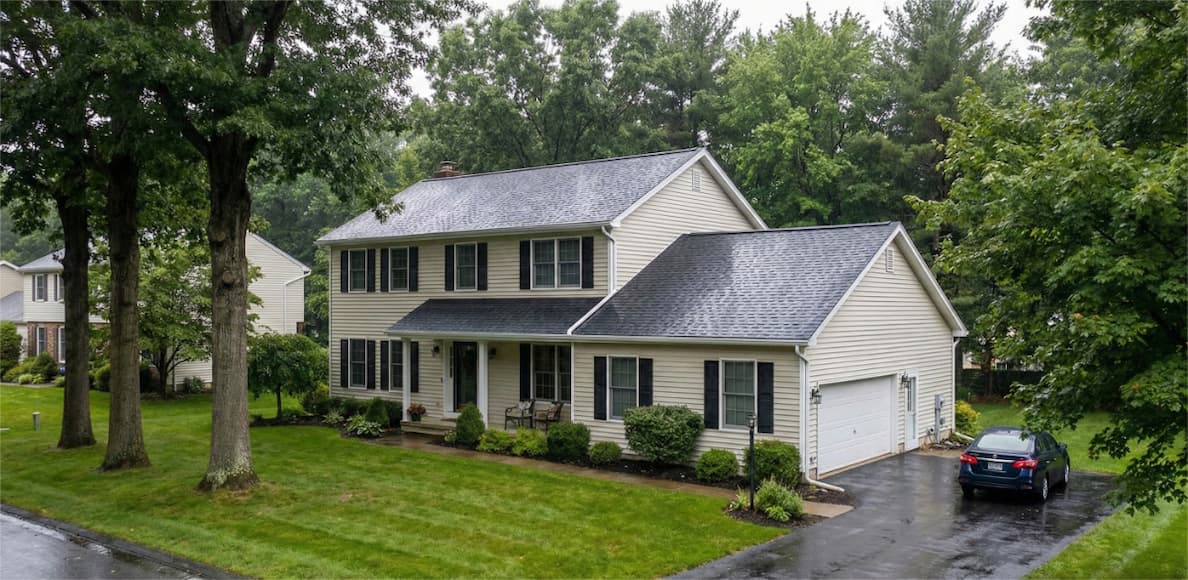
If you have a roof leak, treat it like a fast-moving home systems problem, not a cosmetic annoyance. Today’s storms are delivering more intense bursts of rain in many parts of the U.S., and water exploits the smallest weak point in a roof system.
The future is simple: heavier downpours plus aging materials equals more surprise ceiling stains, attic moisture, and urgent calls for leaking roof repair. The good news is that most roof leaks are manageable if you act quickly, avoid risky shortcuts, and bring in experienced help when the fix is beyond a safe temporary stopgap.
✔ Drying within 24 to 48 hours reduces mold risk and limits material damage
✔ A small leak can turn into structural damage if water repeatedly wets the decking and framing
✔ Safety beats speed because wet roofs are slip hazards, and ladders add fall risk
If your roof is leaking right now, your priority is to reduce damage and prevent the conditions that lead to mold and structural rot.
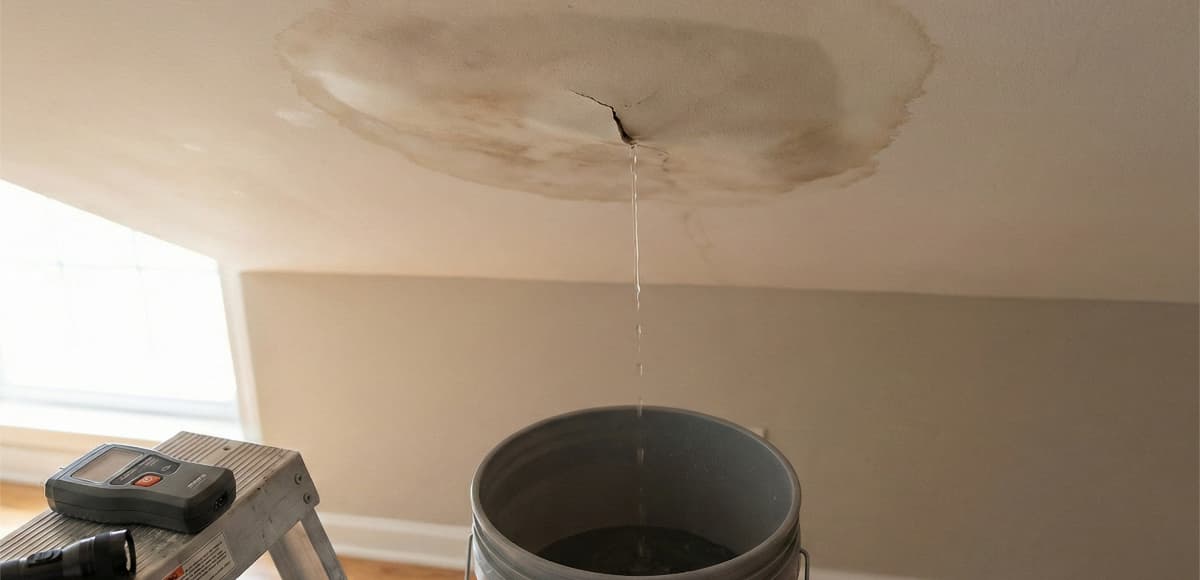
A leak is usually a system failure, not a single bad shingle. In Hyde Park and the Hudson Valley, you see a mix of weather stress and typical wear points.
Attics deserve special attention. The U.S. Department of Energy notes that moisture is the number one enemy of an attic, and it can damage the roof and create problems in living areas. That matters because what looks like a “roof leak” can sometimes be condensation and dampness driven by airflow and temperature differences.
Not all roof leaks show up as obvious drips. Watch for early warning signs that point to roof leakage repair before damage spreads.
If you notice a recurring stain that grows after storms, it is a strong signal that you have active roof leaks, even if the drip is intermittent. A common mistake is treating leaky roof repair like a one-spot issue. In reality, roofs manage water through layered materials, proper overlaps, and flashing details. When one part fails, nearby areas may also be compromised.
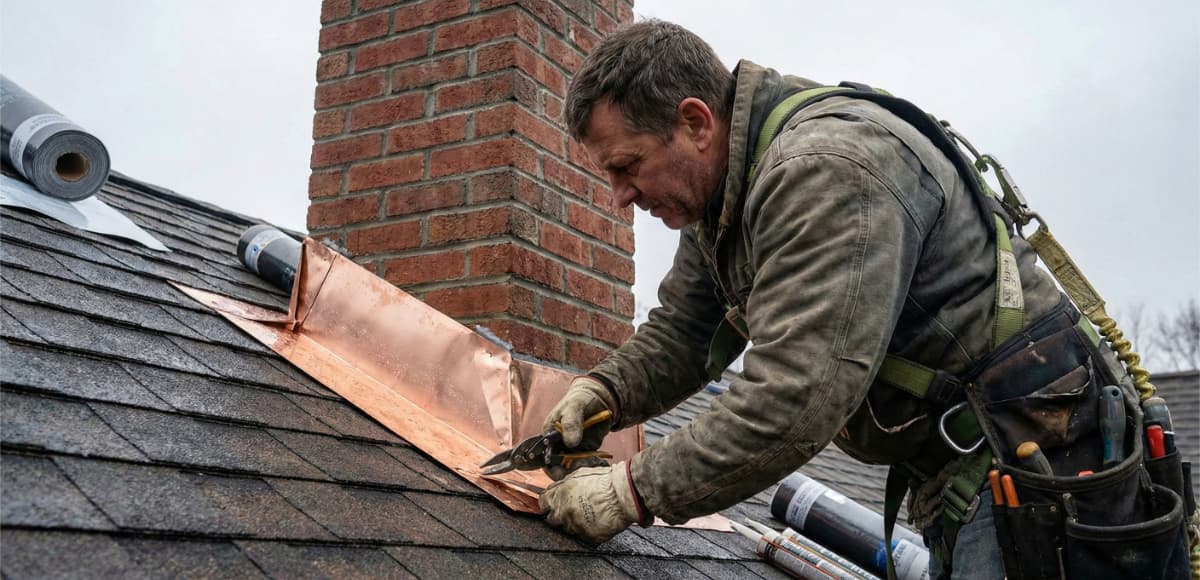
Professional leak roof repair is less about guessing and more about tracing how water is moving through the roof system.
A thorough evaluation usually includes:
Because attic moisture can be a root cause or a multiplier, contractors often look for damp insulation, staining on the underside of decking, and signs of condensation.
The repair depends on what failed and how widespread the damage is.
This is where experienced local contractors earn their keep. The right fix addresses the water entry point and the conditions that allowed water to keep getting in.
Some roof leaks are isolated. Others are warning lights for a roof nearing the end of its useful life. If a roof is showing multiple system failures, focusing only on a small leaking roof repair can become an expensive option. A professional can help you compare the cost and risk of continued patching versus a more comprehensive solution.
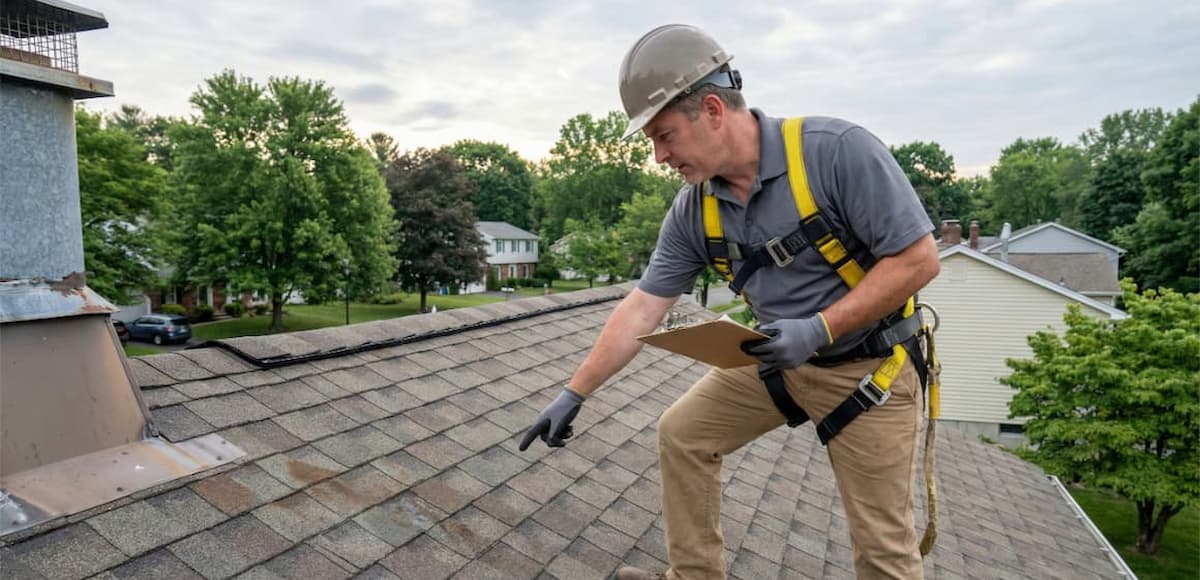
Searching “roof contractors near me” is easy. Choosing the right one is where homeowners protect themselves.
A good roofing contractor will explain the “why” behind the repair plan in plain language and show you the problem areas with photos when possible.
When you are dealing with active roof leaks, you want speed, clarity, and a repair that holds up through the next storm season.
Roofing Experts of Hyde Park focuses on:
If you want the fastest path to peace of mind, the right next step is a professional inspection and a written plan.
You usually know a roof is leaking by the signs it leaves inside your home, not by seeing water on the roof itself. Common indicators include water stains on ceilings or walls, dripping during or after rain, peeling paint, or a musty smell in the attic or upper rooms. In some cases, you may notice damp insulation, mold growth, or granules from shingles collecting in gutters. Because water can travel along rafters before it becomes visible, the leak source is often not directly above the stain.
If a roof leak is not addressed, water continues to penetrate the roofing system and surrounding materials. Over time, this can lead to rotted decking, damaged framing, mold growth, ruined insulation, and stained or weakened drywall. Electrical hazards can also develop if water reaches wiring or fixtures. What starts as a minor leak can turn into a structural issue that is far more expensive to repair than fixing the leak early.
Stop the damage first by containing the drip indoors, then find the true entry point. Permanent fixes typically include replacing damaged shingles, repairing flashing, sealing roof penetrations, and correcting attic ventilation or moisture issues. Because leaks often come from hidden failures, professional roof leakage repair is usually the most reliable way to prevent repeat problems.
A roof leak can go unnoticed for weeks or months, especially in an attic or wall cavity. Even small leaks can quietly damage wood, insulation, and drywall, so act as soon as you notice stains, odors, or dampness.
It depends on how much water is collecting. A slow leak may take weeks to cause failure, but if water is pooling above drywall or plaster, collapse can happen in hours or days. Sagging, bulges, bubbling paint, or cracking are urgent warning signs.
A roof leak rarely stays small. Water keeps moving until it finds a path, and repeated wetting can damage wood, insulation, and interior finishes. If you are seeing stains, drips, attic moisture, or recurring issues after storms, schedule an inspection with Roofing Experts of Hyde Park for straightforward answers and reliable roof leakage repair options in Hyde Park, NY.